
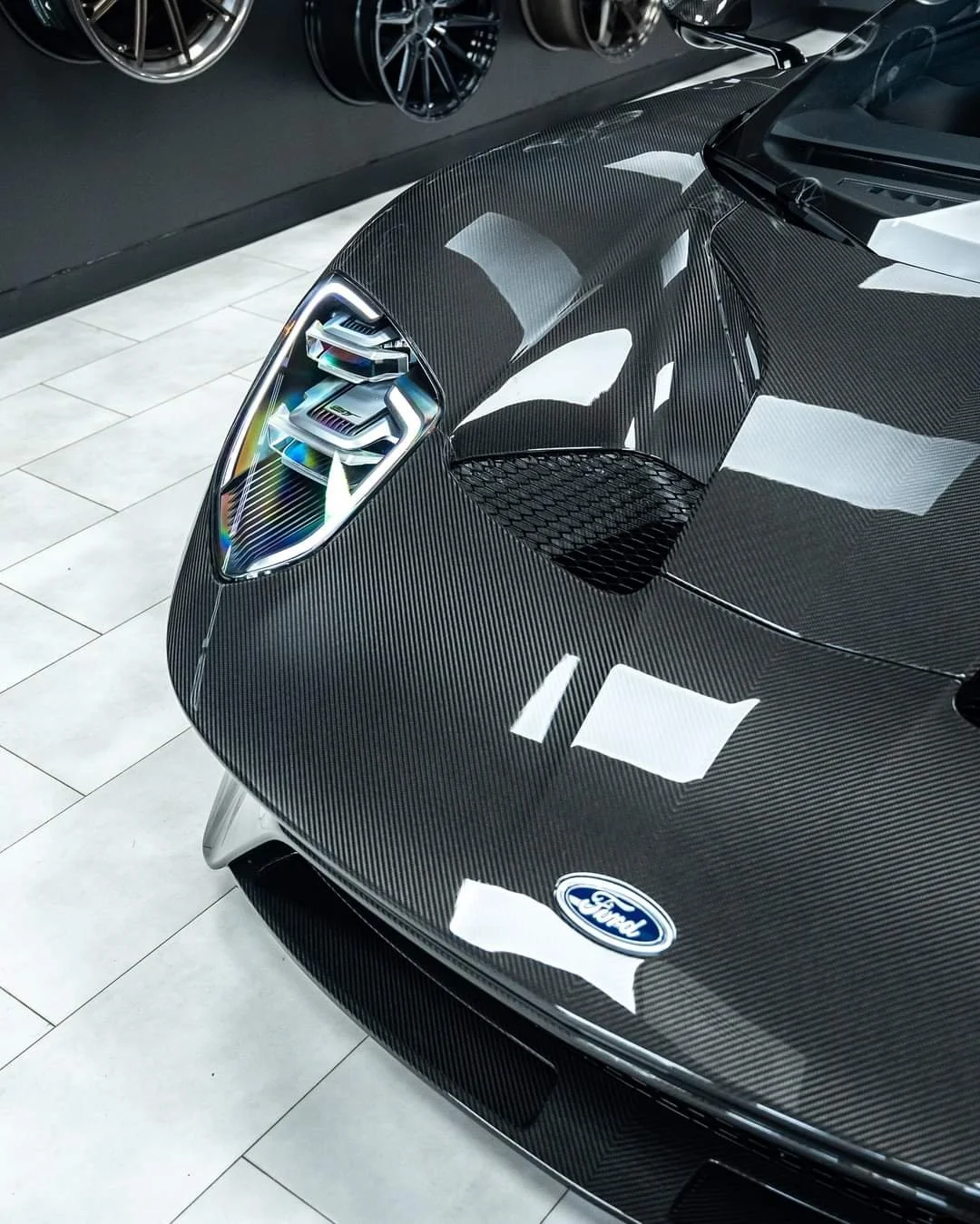
Carbon Fiber for the Automotive Industry
Carbon fibre-reinforced polymer (CFRP) is a strategic material in modern automotive engineering. Its high specific stiffness and strength, excellent fatigue performance, and corrosion resistance enable substantial mass reduction without compromising safety or durability.
For OEMs and Tier 1s, CFRP delivers measurable gains in efficiency, dynamics, and lifecycle costs—critical for both internal combustion and battery-electric platforms.
Structural applications are the core value driver. CFRP is used for body-in-white components, roof panels, hoods, doors, trunk lids, and monocoque structures in high-performance vehicles. Compared with steel, CFRP can reduce component mass by 30–60%, and by 20–30% versus aluminum, while meeting equivalent stiffness and crash requirements through tailored layups and energy-absorbing crush architectures. Bumper beams, side-impact members, and front crash structures use controlled-failure designs to absorb impact energy efficiently, improving occupant protection and repairability.
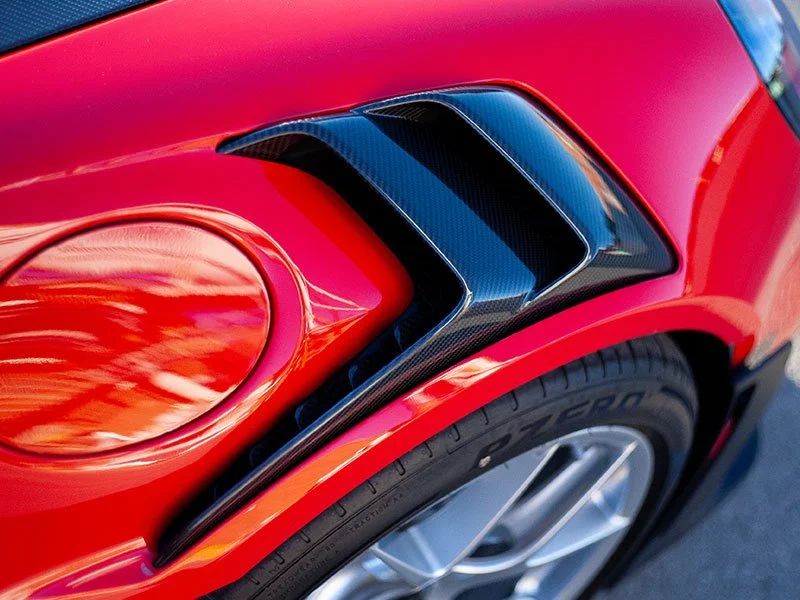
Chassis and dynamics benefit from carbon fibre’s low density and high modulus. Driveshafts, leaf and coil springs, anti-roll bars, and wheels reduce unsprung mass and rotational inertia, improving ride, steering response, and NVH. CFRP wheels and shafts also elevate critical speed margins and reduce torque ripple, enabling higher performance with less vibration. Composite cross-car beams and seat shells provide further weight savings while maintaining occupant comfort and structural integrity.
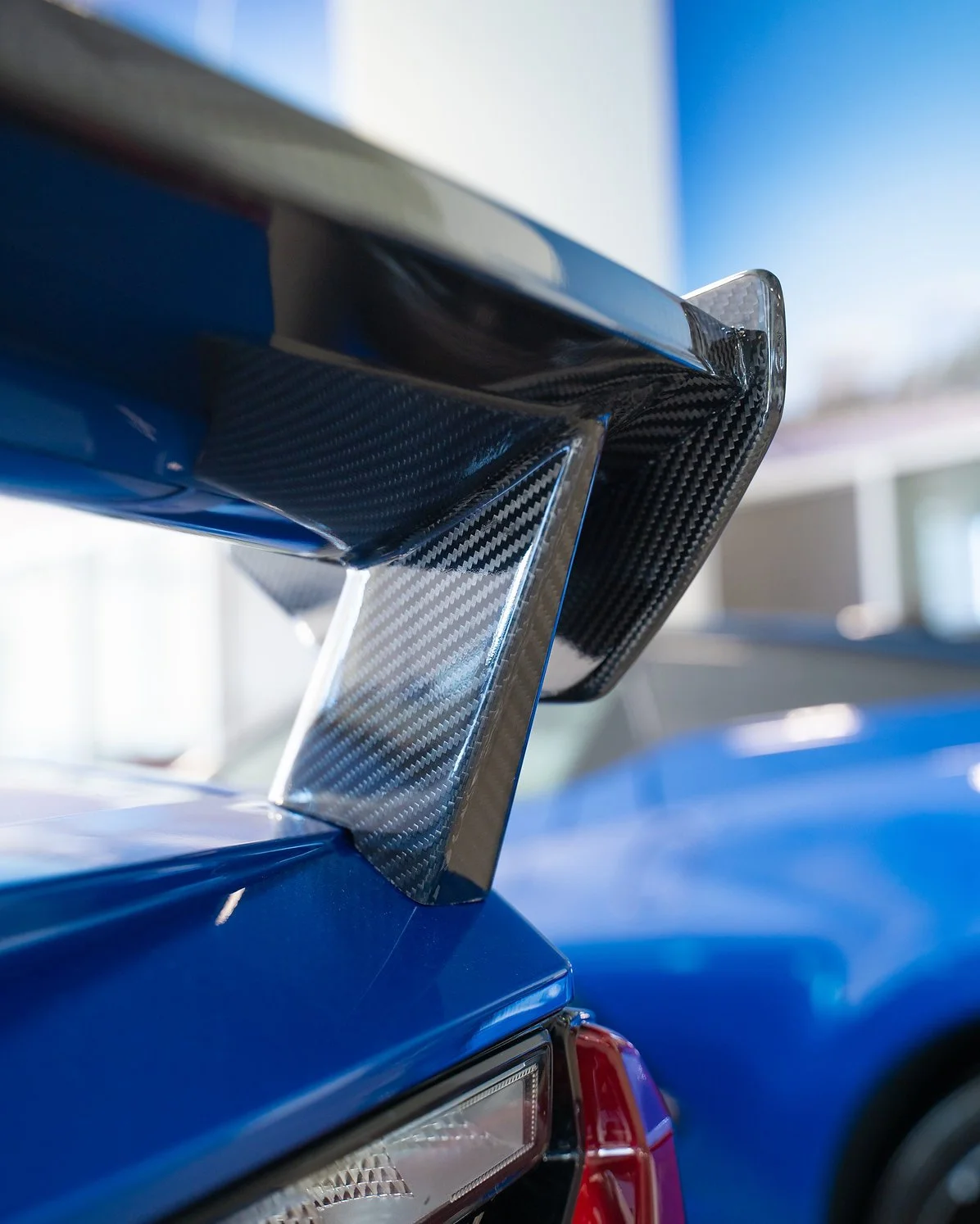
Exterior and aerodynamic components leverage CFRP’s stiffness and stability. Splitters, diffusers, spoilers, mirror caps, and body panels maintain precise geometry under load, improving airflow and downforce consistency. The material also delivers a premium surface finish, with Class A clear-coated aesthetics or paint-ready skins for production vehicles.
Underhood and thermal management applications use CFRP selectively where temperature and chemical compatibility align with resin systems. Airboxes, cold-side intake ducts, intercooler end tanks, and turbo inlet components exploit the material’s stiffness, dimensional stability, and low thermal conductivity. In electric vehicles, CFRP battery enclosures, underbody trays, and crash protection elements combine structural performance with weight reduction. Fire, smoke, and toxicity requirements can be addressed with phenolic or high-Tg resin systems, intumescent coatings, and integrated flame barriers; conductive veils or metallic meshes can be incorporated for EMI shielding where required.
Manufacturing routes are chosen to meet volume, performance, and cost targets:
Prepreg layup and autoclave curing for high-performance, low- to mid-volume programs with tight tolerances.
Resin transfer molding (RTM/HP-RTM) for medium volumes and repeatable, closed-mold quality in structural parts.
Compression molding of carbon SMC and tailored blanks for high-rate production of complex geometries.
Filament winding for rotationally symmetric parts such as driveshafts and pressure housings.
Thermoplastic CFRP for shorter cycle times, weldability, and improved recyclability.
Joining methods include co-curing, adhesive bonding, overmolding, and selective mechanical fastening with metal inserts. Multi-material integration (CFRP with aluminum or high-strength steel) is routine, optimizing load paths while controlling cost.
Sustainability considerations are integral. Vehicle mass reduction supports emissions targets and extends EV range; industry data typically cites a 6–8% fuel economy improvement for every 10% weight reduction. Established recycling pathways (pyrolysis and solvolysis) enable fibre reclamation for non-critical parts and carbon SMC, closing the loop over time.
As a manufacturer of carbon fibre components, we support automotive programs from concept to SOP with design for manufacture, laminate optimization, tooling, and validated production. Our processes are aligned with automotive quality systems (APQP, PPAP, IATF 16949 readiness), with full material traceability, NDI/CT capability, and IMDS reporting. The result is consistent, lightweight components that meet performance, regulatory, and cost targets across performance, premium, and EV platforms.